

bài liên quan
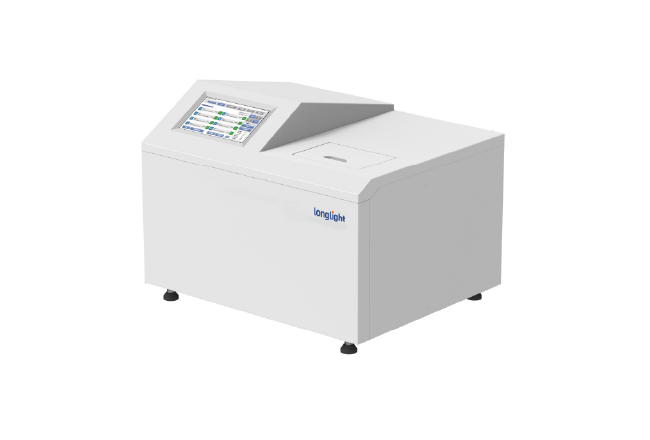
Phân tách thể tích lớn bảo tồn các phân tử sinh học nhạy cảm
2026-04-17Tách khối lượng lớn là điều cần thiết để sản xuất vắc-xin, liệu pháp gen và protein tái tổ hợp. Tuy nhiên, các điều kiện cho phép quy mô - tốc độ dòng chảy cao, lực cắt và áp suất - thường làm suy giảm các phân tử sinh học nhạy cảm. Protein biến tính. Mảnh DNA. Vectơ virus mất hiệu lực.
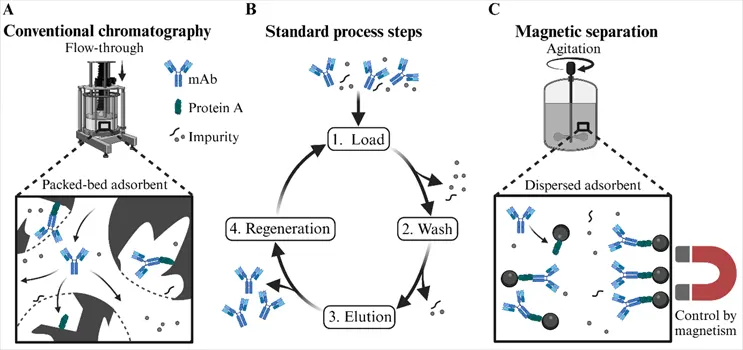
Tăng cường xử lý xuôi dòng với tách từ tính
Các kỹ thuật tách truyền thống được tạo ra cho các phân tử nhỏ. Thuốc sinh học lớn hơn và nhạy hơn nhiều so với các phân tử nhỏ. Thuốc sinh học yêu cầu các kỹ thuật tách để duy trì tính toàn vẹn và độ nhạy của phân tử sinh học để sản phẩm trở nên hữu ích. Bài viết này cho thấy một trong nhiều lợi thế của việc sử dụng quá trình tách từ, đối với phân tử sinh học, bằng cách cho thấy độ nhạy của quá trình tách từ trong quá trình tách khối lượng lớn.
Phương pháp tách truyền thống
Khi hầu hết các kỹ sư xem xét giá trị của các phân tử sinh học bị mất sau quá trình tách, họ nói về hiệu quả của yếu tố liên kết phân tử sinh học và thu hồi rửa giải. Tuy nhiên, hầu hết sự xuống cấp của sản phẩm xảy ra trước khi tính năng suất và trong giai đoạn tách.
Các phương pháp phân tách truyền thống khiến các phân tử tiếp xúc với nhiều dạng vật lý và hóa học có hại trong giai đoạn tách.
• Tách màng và cột: Các dòng phân tử sinh học gây ra sự gấp lại, quay và sắp xếp lại các phân tử cấu trúc và polyme linh hoạt, gây ra sự suy thoái đáng kể và đôi khi không thể đảo ngược.
• Tách thông qua gia nhiệt hoặc làm mát: Hầu hết các phương pháp tách truyền thống đều yêu cầu chu kỳ làm nóng và làm mát các phân tử sinh học. Điều này dẫn đến sự phá hủy các phân tử sinh học và hình thành các tập hợp.
• Phân tách, tức là điều khiển bằng áp suất: Dòng cơ học và tiếp tuyến của các phân tử sinh học liên kết với bề mặt của bộ lọc, có thể gây ra đứt gãy bị cắt hoặc không thể đảo ngược khi phân tử sinh học bị mất.
• Phân tách thông qua việc sử dụng dung dịch đệm rửa giải: Thay đổi môi trường hóa học xung quanh và dung dịch đệm rửa giải có độ pH thấp hơn (hoặc đôi khi cao hơn) có thể làm thay đổi cấu trúc của phân tử sinh học.
Tiến sĩ Lydia Kisley và nhóm nghiên cứu của Đại học Case Western Reserve đã chỉ ra rằng một số vật liệu tách thương mại được dán nhãn là "xốp hoàn toàn" có các phần trung tâm hầu như không hoạt động. Điều này có nghĩa là các nhà sản xuất đang trả tiền cho toàn bộ công suất, nhưng chỉ nhận được một phần nhỏ hiệu suất tiềm năng. Điều này, kết hợp với thời gian xử lý kéo dài, có thể dẫn đến phân hủy các phân tử sinh học.
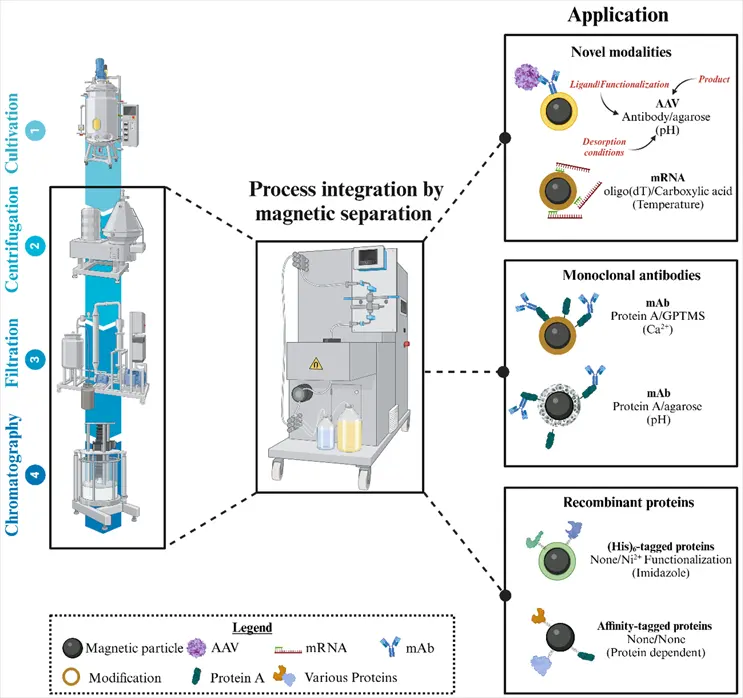
Tăng cường xử lý xuôi dòng với tách từ tính
Khi được thực hiện tích lũy, hoạt động cụ thể giảm, tăng kết tụ phân tử sinh học và giảm năng suất cuối cùng dẫn đến việc tái xử lý tốn kém.
Tại sao nên sử dụng phương pháp chế biến thông thường Cmột't Phát triển hơn nữa
Các phương pháp trong phòng thí nghiệm có nhiều phương pháp tách có thể được sử dụng, nhiều phương pháp có thể trở nên không thực tế ở quy mô công nghiệp.
Một ví dụ về phương pháp có vấn đề về tỷ lệ là sử dụng cột sắc ký.
• Vận chuyển mục tiêu bị thu hẹp: Trong sắc ký giường đóng gói, sự liên kết xảy ra thông qua sự khuếch tán của chất phân tích. Đối với các phân tử sinh học có kích thước lớn hơn 100 Da, thời gian khuếch tán là gần bề mặt liên kết và loại trừ diện tích đáng kể.
• Tắc nghẽn: Để ngăn chặn tắc nghẽn trong các cột quy mô công nghiệp, dòng thức ăn được ngăn chặn được làm rõ trước.
• Tăng tiêu thụ bộ đệm: Các cột quy mô công nghiệp tạo ra một lượng lớn bộ đệm đã qua sử dụng, tạo ra chi phí tăng cho hoạt động.
• Độ nhạy cắt trong quá trình đóng gói và vận hành: Các lực cơ học cần thiết để duy trì bao bì giường đồng đều ở quy mô lớn có thể làm hỏng chính các phân tử sinh học mà cột được thiết kế để tinh chế.
Các nhà nghiên cứu Julian Galbusera, Ines Zimmermann và Paula Fraga-García của Đại học Kỹ thuật Munich đã ghi lại cách công nghệ tách từ giải quyết những nút thắt cổ chai này. Trái ngược với sắc ký tiêu chuẩn, theo đó pha tĩnh là một ma trận các hạt đóng gói được thấm bởi chất lỏng di động, tách từ xử lý dòng cấp liệu trực tiếp bằng cách đình chỉ các hạt từ tính có chức năng. Điều này cho phép các rào cản khuếch tán thường gây khó khăn cho sắc ký được phá vỡ hoàn toàn, tất cả trong khi hoạt động ở quy mô lớn và xử lý các ly giải chưa được làm rõ.
Giải pháp thay thế từ tính: Nhẹ nhàng, nhanh chóng và có thể mở rộng
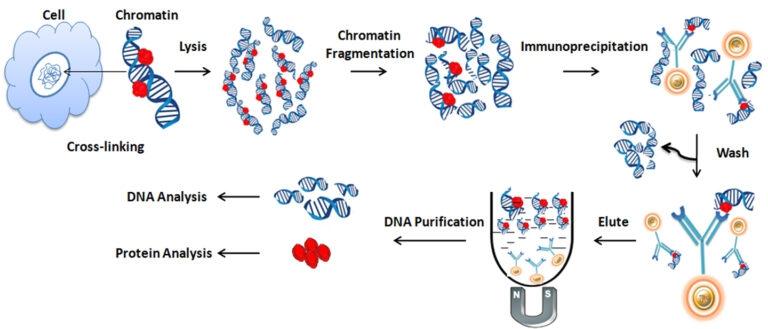
Các nguyên tắc tách từ về cơ bản là khác nhau. Các hạt từ tính chức năng nhắm mục tiêu vào các loài phân tử cụ thể trong huyền phù. Việc áp dụng từ trường bên ngoài bắt giữ các phức hợp hạt-mục tiêu và cho phép rửa trôi thường xuyên các loài không mong muốn. Phức hợp loài mục tiêu hạt được che chắn khỏi ứng suất cắt và nhiệt trong quá trình xử lý.
Đối với các quá trình tách khối lượng lớn, ưu điểm của kỹ thuật này từ góc độ phân tách các phân tử sinh học nhạy cảm là một số:
• Không cần khuếch tán qua lỗ rỗng: Các hạt từ tính thường không xốp. Do đó, bước khuếch tán chậm, là bước hạn chế động học liên kết của tất cả các phương pháp sắc ký, bị phá vỡ. Điều đáng nói là các phân tử sinh học lớn liên kết trực tiếp với bề mặt hạt.
• Bắt và giải phóng nhẹ nhàng: Từ trường tác dụng một lực thể tích mềm trái ngược với áp suất rất cao và mật độ đóng gói rất cao là đặc trưng của cột giường đóng gói. Các tế bào vẫn còn nguyên vẹn. Véc-tơ vi-rút vẫn giữ khả năng lây nhiễm. Cấu trúc protein vẫn gấp lại.
• Xử lý trực tiếp tải thô: Tách từ có thể xử lý các dòng cấp liệu đục, chứa nhiều hạt mà không cần lọc trước. Điều này giúp loại bỏ một hoặc nhiều hoạt động của đơn vị khỏi tàu hạ lưu.
• Tiêu thụ bộ đệm tối thiểu: Vì các hạt từ tính được lơ lửng và thu hồi thay vì cố định trong một cột, khối lượng đệm có thể giảm đáng kể, giảm cả chi phí và tác động môi trường.
Một nghiên cứu năm 2023 được công bố trên tạp chí Molecular Therapy — Methods & Clinical Development đã chứng minh ứng dụng thực tế của nguyên tắc này. Các nhà nghiên cứu đã phát triển một phương pháp bắt từ tính không cần bộ lọc để tinh chế virus liên quan đến adeno tái tổ hợp (rAAV5) trực tiếp từ ly giải tế bào. Trong vòng chưa đầy hai giờ, họ đã đạt được 63% năng suất phục hồi từ khoảng 5 lít ly giải, với việc giảm ba log DNA tế bào chủ và protein tế bào chủ, đồng thời loại bỏ hoàn toàn các bước lọc sâu và sắc ký cột.
Hiệu suất trong thế giới thực at Quy mô sản xuất
Câu hỏi đối với các nhà sản xuất công nghiệp không phải là liệu tách từ có hoạt động trong phòng thí nghiệm hay không mà là liệu nó có hoạt động đáng tin cậy ở khối lượng sản xuất hay không. Bằng chứng tiếp tục tăng lên trong sự khẳng định.
• Tinh chế protein quy mô lít: Nghiên cứu được công bố trên ACS Omega đã chứng minh rằng quy trình đánh bắt từ tính một bước có thể đạt được độ tinh khiết 91% của protein huỳnh quang xanh lá cây (GFP) trực tiếp từ dịch ly giải tế bào Escherichia coli thô ở thể tích lít, sử dụng các hạt nano oxit sắt trần được tạo ra thông qua tổng hợp đồng kết tủa đơn giản.
• Tách từ gradient cao trên quy mô lớn hơn: Nhiều nguyên tắc tách từ gradient cao (HGMS) tương tự cho phép tinh chế trong phòng thí nghiệm được sử dụng trong sản xuất vắc-xin mRNA công nghiệp. Một nhóm đã tạo ra một buồng tách HGMS dùng một lần, in 3D từ vật liệu tuân thủ USP Class VI. Trong trường hợp này, buồng hoạt động ở tốc độ dòng chảy 150 mL mỗi phút, với tỷ lệ lưu giữ vượt quá 99,39%. Điều này có nghĩa là các phương pháp tách từ duy trì hiệu quả thu giữ ở tốc độ dòng chảy được sử dụng trong Tách thể tích lớn.
• Ứng dụng trong liệu pháp tế bào: Hệ thống tách từ được sử dụng để tự động hóa cách ly tế bào T đạt hiệu suất lớn hơn 85% và độ tinh khiết lớn hơn 96%, ở quy mô sẵn sàng cGMP cho nghiên cứu và sản xuất, trong 70 đến 100 phút.
Công nghệ Longlight: Kỹ thuật fhoặc tAnh ấy Chạy dài
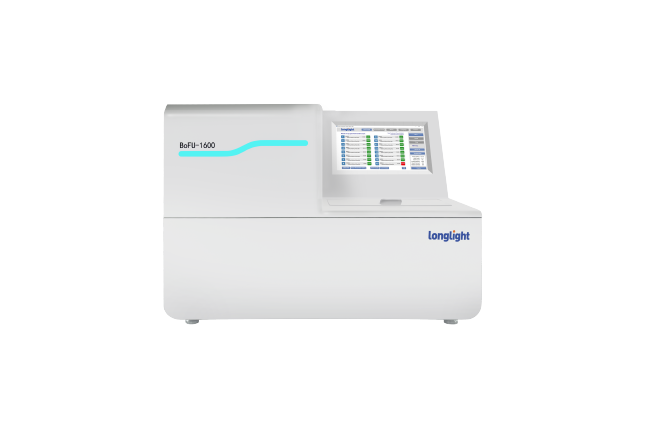
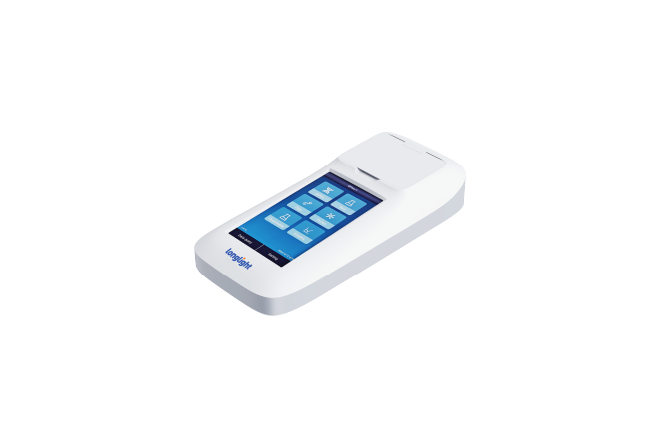
Công nghệ tách cung cấp dịch vụ liên tục khối lượng lớn làm cho trọng tâm kỹ thuật của Longlight Technology.
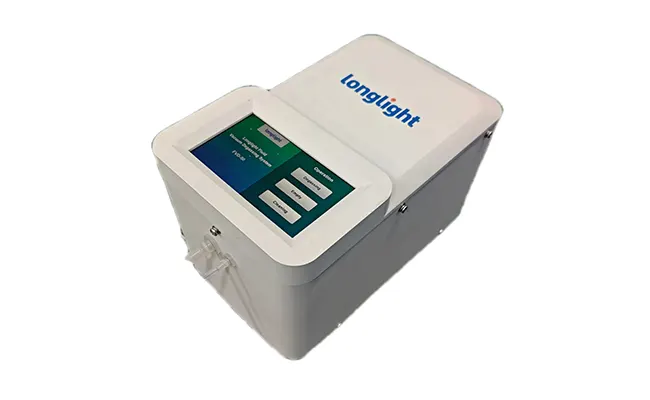
Trong lĩnh vực tách từ, các hệ thống của Longlight được thiết kế để duy trì cường độ từ trường đồng đều trên các khối lượng chụp lớn - một trong những yêu cầu quan trọng nhất để cung cấp kết quả có thể tái tạo hết đợt này đến đợt khác. Khả năng tái tạo từ lô này sang lô khác trong các tách khối lượng lớn là điều mà môi trường được quy định cho sản xuất đơn giản là không thể chịu đựng được.
Bộ sưu tập các hệ thống cung cấp câu trả lời cho những thách thức cụ thể mà xử lý khối lượng lớn đòi hỏi:
• Bắt lực từ tập trung cao trên toàn bộ vùng bắt: Điều này đề cập đến vấn đề phân bố không đồng đều của gradient từ trường giảm dần, theo đó một số hạt được thu giữ với hiệu quả cao và những hạt khác vẫn còn. Chúng bị bắt và sau đó trốn thoát, làm giảm năng suất và tạo ra sự thay đổi.
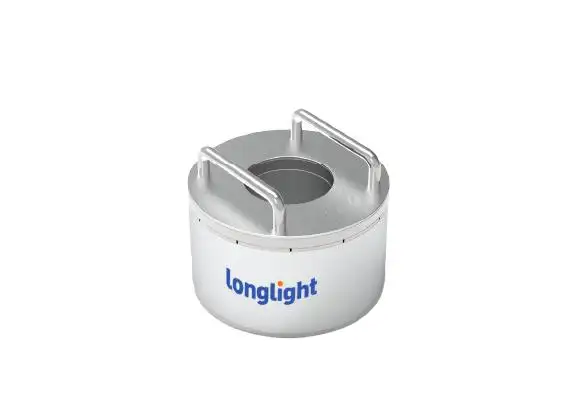
• Buồng tách (tàu) có khả năng thu giữ hiệu quả khi thể tích của buồng tăng từ quy mô bàn làm việc một chút đến lô quy mô sản xuất.
• Quy trình linh hoạt: Hệ thống không cần thực hiện bất kỳ sửa đổi đáng kể nào để phù hợp với các loại hạt từ tính, chất kết dính và quy trình vận hành khác nhau.
Vượt qua sự thỏa hiệp
Hành động cân bằng của các nhà sinh học trong việc lựa chọn hiệu quả trong việc phân tách hoặc bảo tồn phân tử sinh học, sắp kết thúc. Công nghệ sử dụng nam châm trong hoạt động không phải là điều mà ngành công nghiệp vẫn đang thử nghiệm. Đây là một thực tiễn công nghiệp đã được thiết lập và được chứng minh trong các bài báo được bình duyệt khác nhau. Những sản phẩm này có thể được tìm thấy trong kho của nhiều nhà sản xuất và nhà cung cấp chắc chắn trong ngành.
Trong các ứng dụng mà giá trị của hạt cuối (đóng gen, đóng m RNA, đóng kháng thể đơn dòng, các sản phẩm tế bào và tế bào, v.v.) là đặc điểm phân biệt, tách từ:
1. Duy trì hoạt động sinh học bị mất trong quá trình tách thông thường;
2. Loại bỏ một số hoạt động tách bằng cách làm rõ nguồn cấp dữ liệu ban đầu.
3. Yêu cầu ít đệm hơn và ít tiếp xúc với hóa chất.
4. Dễ dàng sửa đổi từ R & D sang dây chuyền sản xuất đầy đủ.
Nền tảng khoa học được thiết lập tốt. Kỹ thuật đã trưởng thành. Câu hỏi bây giờ không phải là liệu tách từ có thuộc về xử lý sinh học khối lượng lớn hay không, mà là các nhà sản xuất sẽ áp dụng nó nhanh như thế nào để bảo vệ những gì quan trọng nhất - các phân tử mang lại giá trị điều trị.
Để khám phá cách hệ thống tách từ có thể giải quyết các tách thể tích lớn trong quy trình cụ thể của bạn, hãy truy cập www.longlight.com để biết thông số kỹ thuật và hỗ trợ ứng dụng.
Câu hỏi thường gặp
Hỏi: Một khối lượng lớn dịch ly giải tế bào chưa được làm rõ có thể được xử lý bằng cách tách từ tính không?
A: Vâng. Tách từ có thể được thực hiện trên các dòng cấp liệu có độ đục cao và không yêu cầu bất kỳ quá trình lọc sơ bộ dòng cấp nào, do đó, giảm số lượng hoạt động của đơn vị.
Hỏi: Có đúng là hoạt động của protein ít bị suy thoái hơn trong quá trình tách từ sinh học không?
A: Vâng. Các phương pháp tách từ sinh học không chịu áp suất / vận tốc cao hoặc sử dụng hệ thống đệm nghiêm trọng để tách và thu hồi các phân tử sinh học.
Q: Có thể mở rộng quy mô tách từ từ phòng thí nghiệm sang sử dụng thương mại / công nghiệp không?
A: Vâng. Vật lý của việc bắt từ hoạt động theo cùng một cách trong mililit và hệ thống hàng trăm lít của bất kỳ thể tích nào.
Hỏi: Những phân tử sinh học nào có thể được xử lý dễ dàng bằng cách tách từ tính với khối lượng lớn?
A: Vectơ virus, mRNA, rProtein, exosome và tế bào, v.v. Những vật liệu này dễ bị ứng suất cơ học hoặc nhiệt.
